
Squabbling Gotlanders and beastly Danes: a story told in crumbling beauty
Visby's ruined churches tell a sad story of civil conflict, trade wars and invasion. How one of Europe's richest cities fell; but remains beautiful.

If you walk around the town of Visby, on the island of Gotland, you will see the great warehouses that brought so much prosperity in the thirteenth century, as I have written here. But as you keep wandering, it’s hard not to notice something else: a plethora of ruined churches. Victims of a raft of disasters that tipped the island from wealth to misery in a handful of decades.
The busy main square, Stora Torget, has bars and restaurants on three sides; the fourth is filled by the remains of a large church. This is St Catherine’s. It was built by the Franciscans in the 1230s, it is still elegant, but it has been crumbling for 500 years.
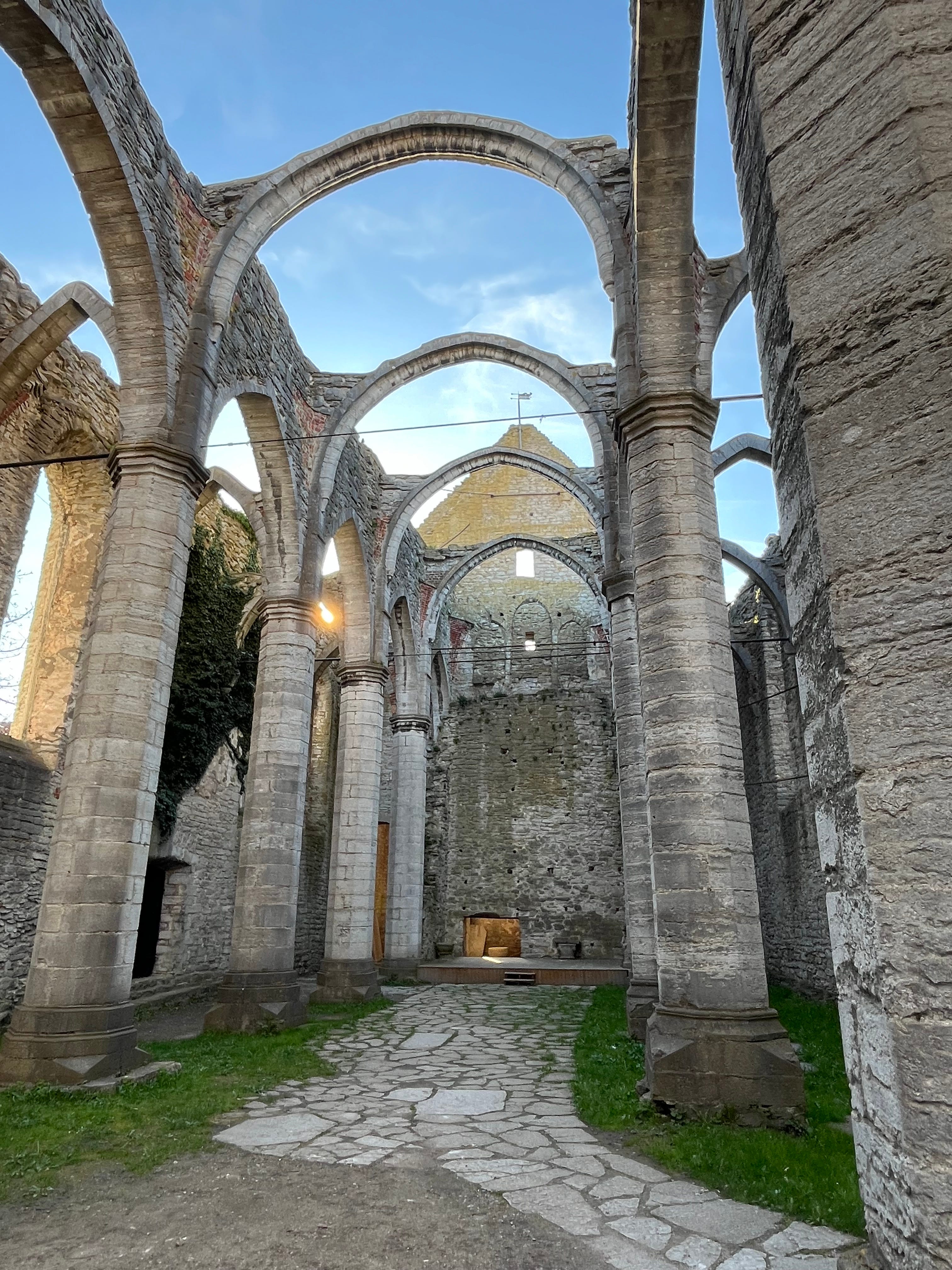
In the boom times, eighteen churches were built in Visby – more than in any Swedish town. Many are still there, but in ruins. Turn a corner in Visby, and don’t be surprised if you see another shattered church: there are 12 in a very small area, evidence of the town’s spectacular fall from wealth.
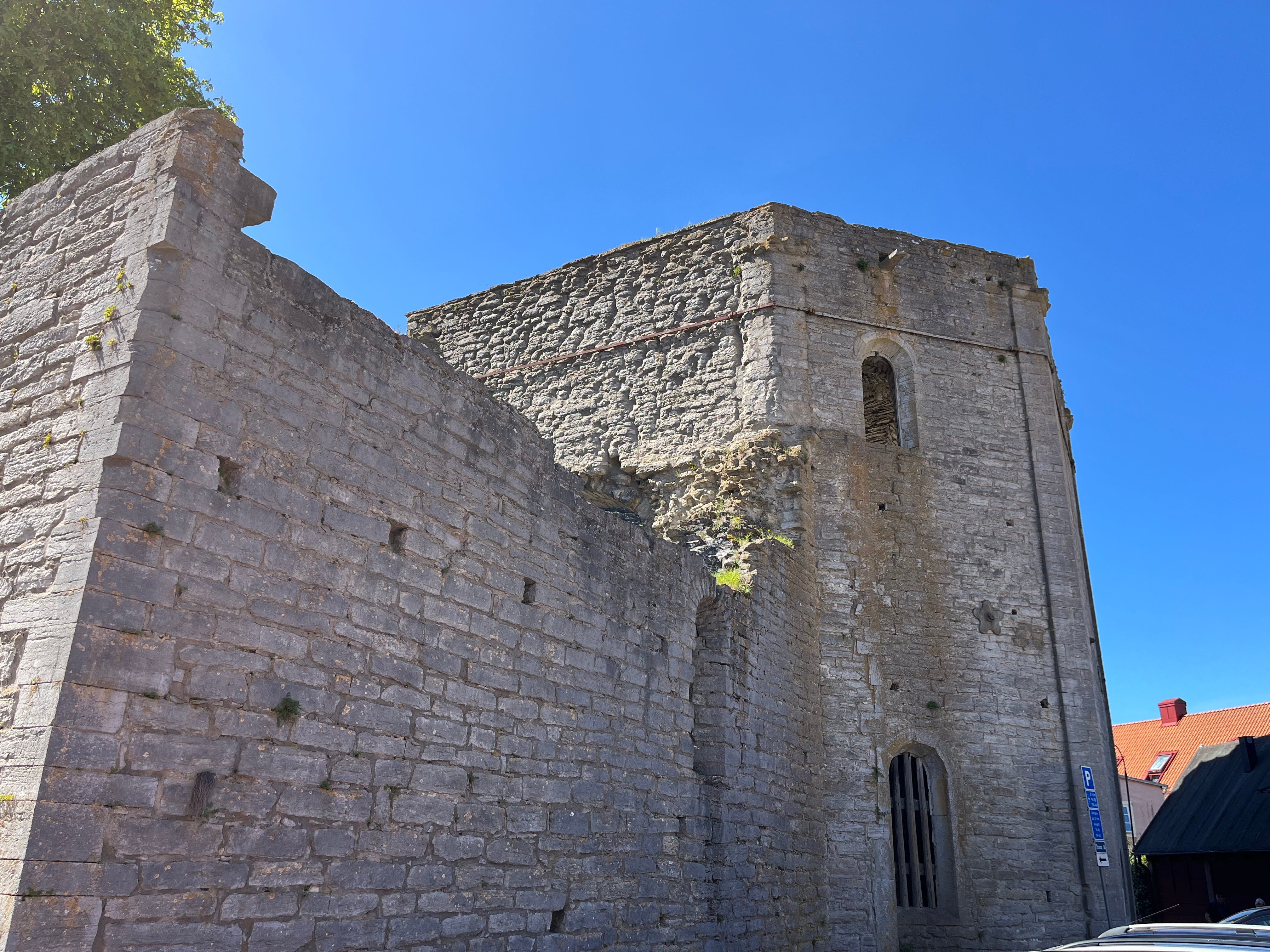
Helga And is octagonal and unique in Sweden, its noticeboard told me. It is one of the oldest churches, reputedly built by Bishop Albert around 1200 as he gathered his crusaders to go and bash the pagans. After declining slowly, it was gutted by fire in 1611, and took up a lowly existence as a cowshed.
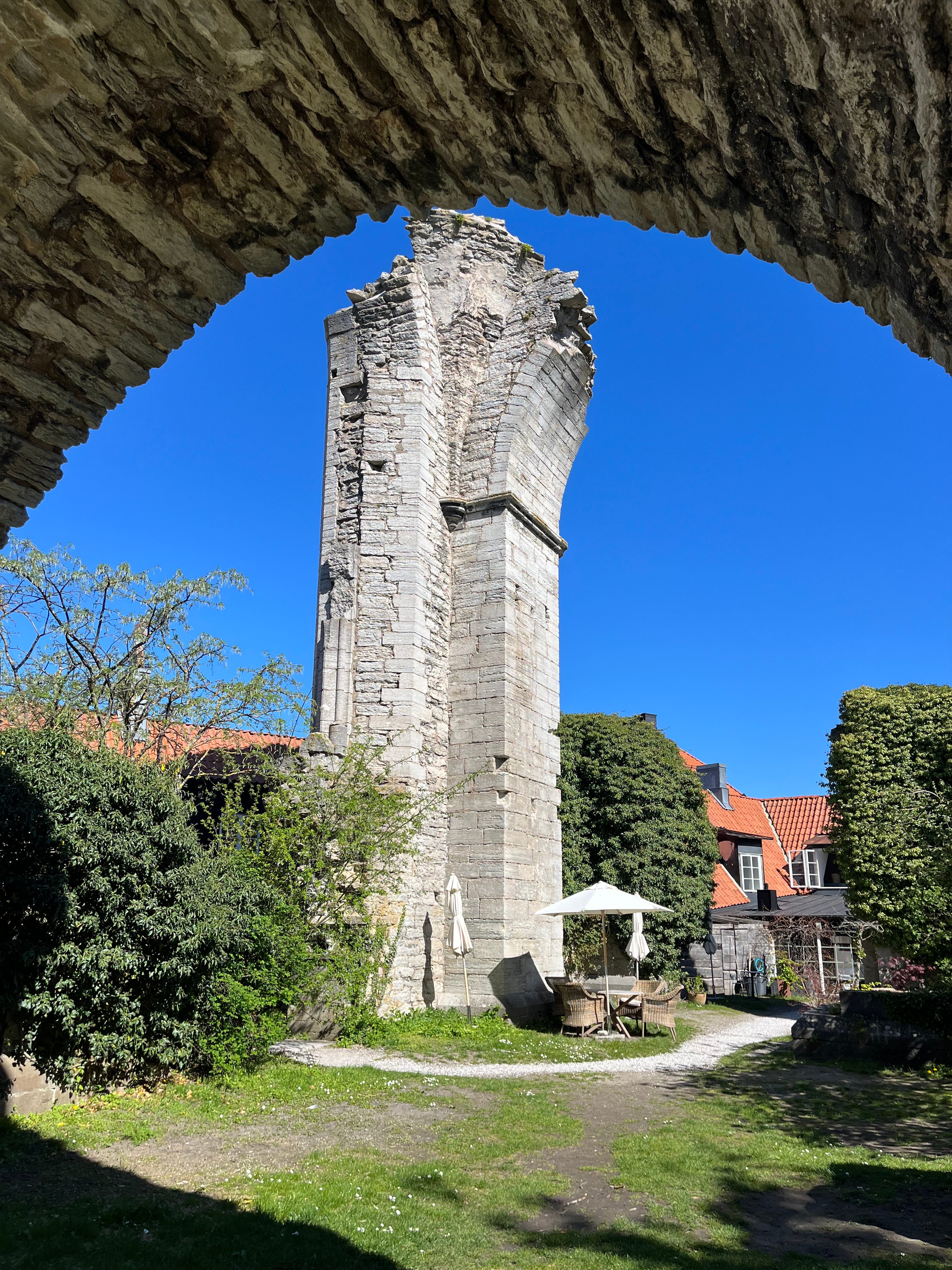
I had a coffee in a pub garden near the harbour, and realised I was in the ruins of not one, but two churches: St Peter and St John. Apparently St Peter’s was so popular that St John was built right next to it, creating the biggest church in the town. They were finally destroyed when the lord of a nearby castle decided their towers were too handy a place for snipers to roost. But they were crumbling well before that.
The churches are as firm a reminder of Visby’s boom and bust as you could want. But most of them hung on for a couple of hundred years before finally being abandoned. In the countryside, the reversal in fortunes had a more immediate, and frankly odd, effect.
I went to Källunge, in the centre of the island. Even my guidebook admits the church is ‘somewhat disproportionate’. It was built in the 1200s, but towards the end of the century the local parish decided to turn it into a magnificent gothic church, one of the largest on Gotland. But the bad times stopped all building with the result that it has a massive chancel – where the altar and choir are – but a tiny knave and a spire that is barely taller than the chancel. ‘Is it a snail that has crept out of its shell?’ asks the Danish archaeologist Jes Wienberg, going on to explain that there are 11 such ‘pack-saddle’ churches on the island.
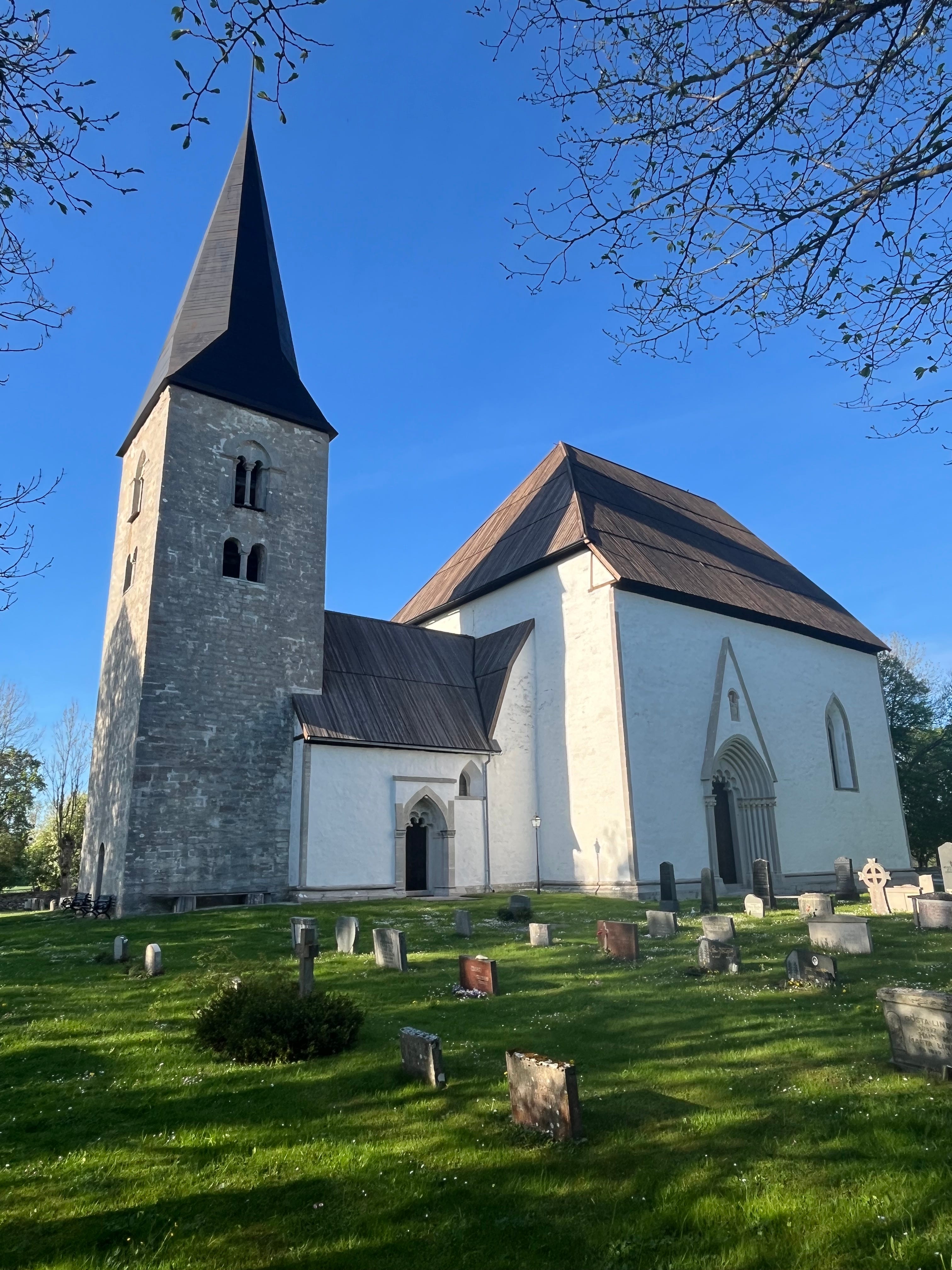
Gotland’s eccentric churches tell the story better than words can. Much excitement, frantic building, then screeching brakes and everything put on hold. To an extent this was just a normal boom-and-bust cycle. Visby became wildly over-churched, and there was bound to be a reaction. But the decline went way beyond that: Gotland went into deep decline in the late 1200s and didn’t really get going again until the 19th century. It’s a sad story but also a fascinating one.
There has been much head-scratching over Gotland’s decline. In about 1525, a Dutch lady put it down to God: ‘Once Visby was the most distinguished trade town in the Baltic Sea, and now it lies in ruins, which is the will of God. With this He wants to demonstrate that there is nothing on earth upon which one can rely with certainty’.
Other explanations are available. Pick and mix from trade, civil war, plague, invasion, invasion and invasion.
In 1286, ships heading north from Germany started to pass Gotland without stopping. The design favoured by the Hanseatic League was the tough flat-bottomed cog, and as these got bigger they could sail for longer without a pitstop. Bad for Visby’s business.
The Hanseatic League, which was born in Visby, as I’ve reported here, was getting ever more powerful, and was now throwing its weight around. The island was unusual in being far more than a town with countryside around it: its farmer-merchants, descendants of Viking slave traders, were as important as the townspeople to economic vibrancy. So when Lübeck, now the leader of the Hanseatic League, insisted that only Visby merchants could trade with its cities, the farmers were furious. In 1288 they looted the town, which responded by throwing up the walls that are still impressively there.
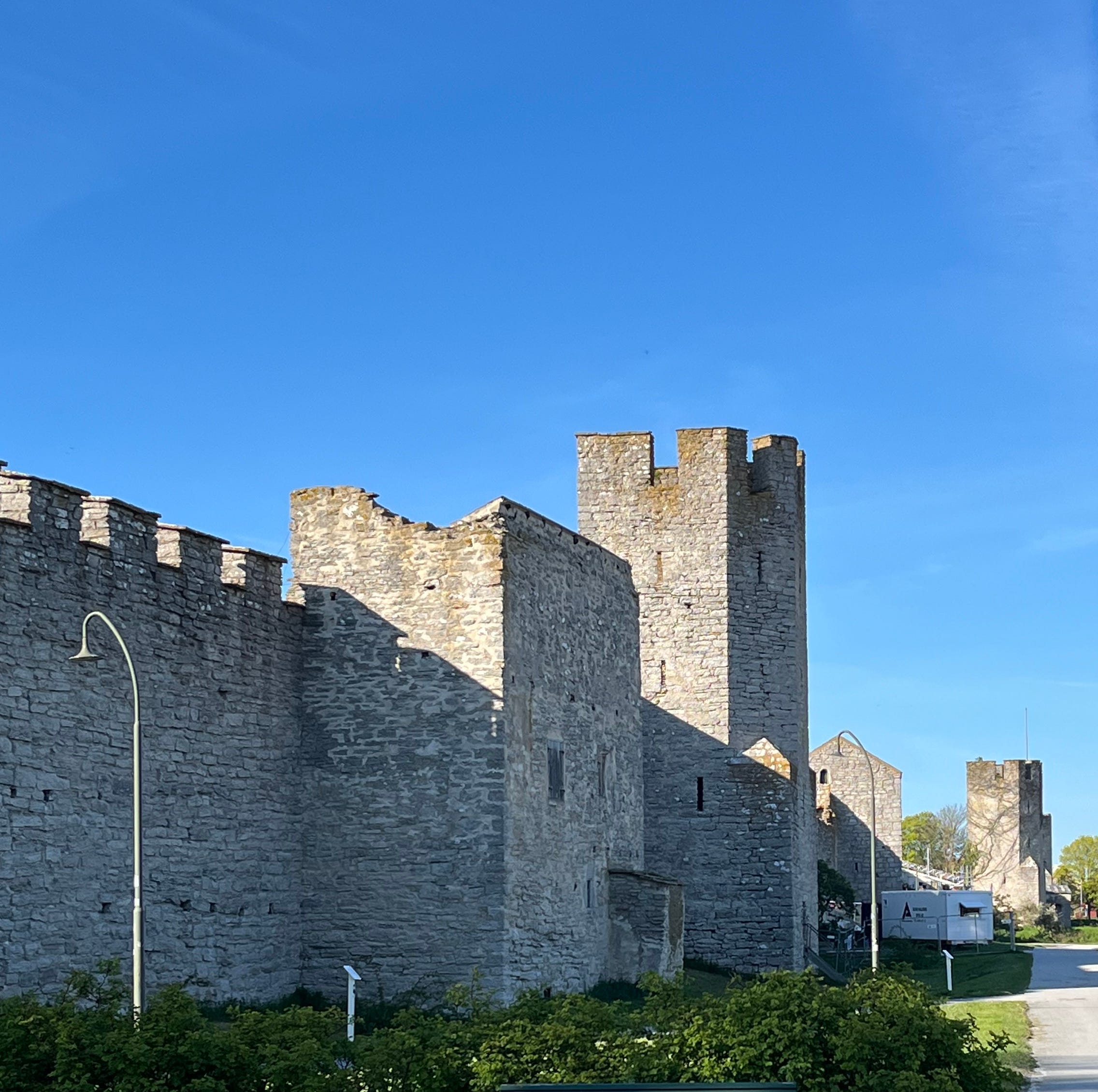
The schism between town and country did nobody any good. The farmers were still without their old trading rights, while Visbyites were now forced to follow strict German town rules. It was a fracture that created great weakness, and some academics believe 1288 marked the start of Gotland’s decline. Certainly, little went well from then on.
One of the biggest disasters was shared with the rest of Europe. The Black Death arrived in Visby in the summer 1350. The city fathers reacted in a contemporary way by burning nine people who confessed under torture to causing it by poisoning wells.
But the poor island then had its own man-made plague, brought on by an unreasonably aggressive neighbour.
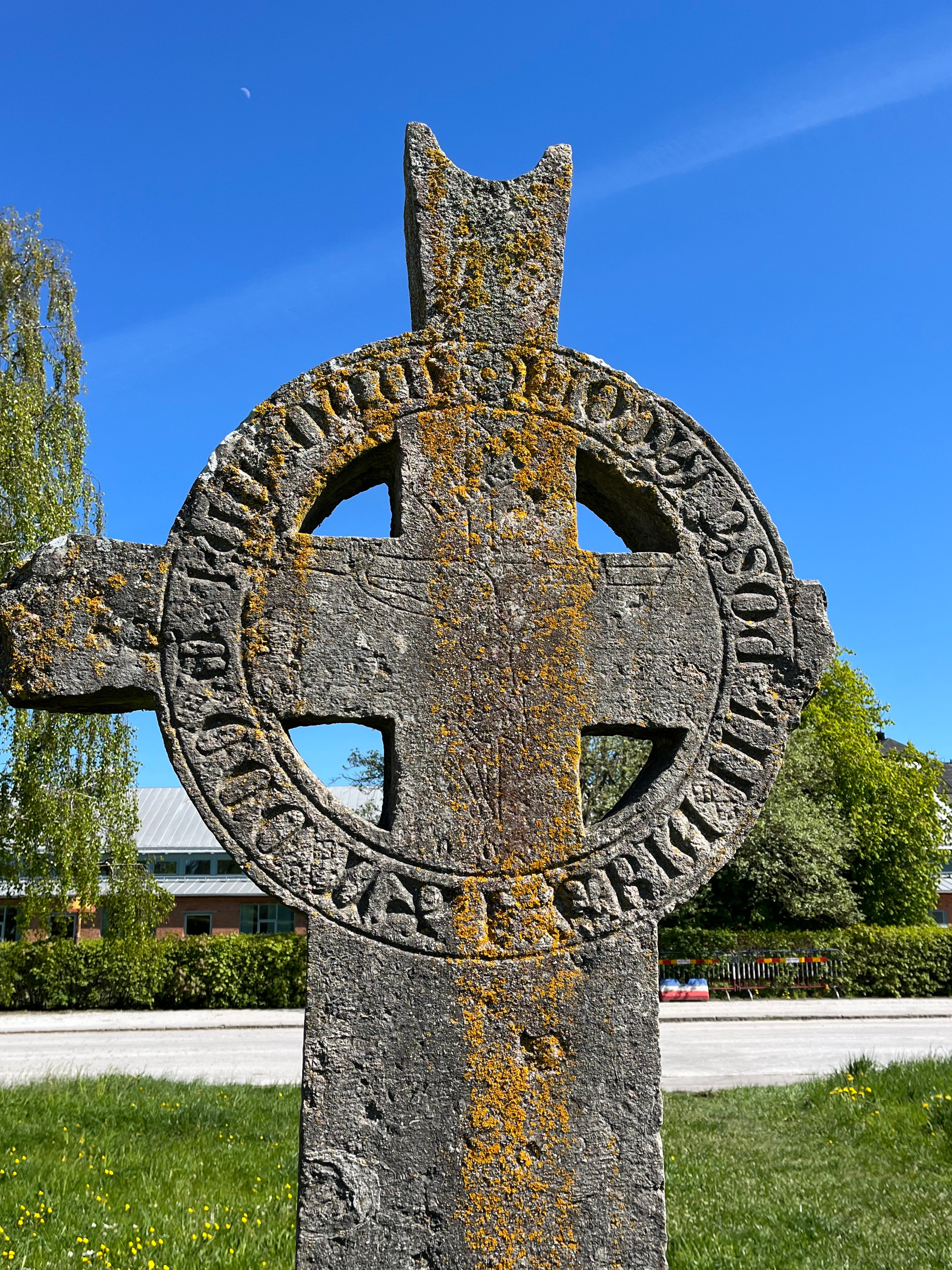
I walked out of the south gate of Visby and found myself in an anonymous business park. Here, just past the Swedish Radio building, was a bit of rough land. I could see the foundations of an old building, the Solberga Convent it turned out, and a church along the road. But here too was a stone cross with Latin writing on it. I couldn’t make out the words, but I shall believe the translation I have found elsewhere: ‘In the year of our lord 1361, on the third day after St James, Gutes were put to the sword by Danes in front of Visby’s gates. They are buried here. Pray for their souls.’
Scandinavian politics were chaotic in the fourteenth century, with the Swedish and Danish kings, the Hanseatic League and a mess of other German factions squabbling enthusiastically. The worst news for Gotland came when Denmark finally got a strong king, and an aggressive one. Valdemar was 20 when he took over. He got himself the nickname Atterdag, which means ‘new day’ or revival, with some reason. He managed to claw back Danish territory with a mix of violence and cash – selling off land he didn’t want, renting out mercenaries, and taxing peasants – before turning his attention abroad. His enemies included Sweden and the Hanseatic League, so he decided to go for a soft early target: Gotland.
On 1st May 1361, Magnus Eriksson, king of Sweden, warned the Gotlanders to expect an attack. Across the island farmers dug out the family armour and spears, and gathered together in a militia. On July 22nd, 30 Danish ships were spotted off the west coast. The Danes landed at Vivesholm, south of Visby, and headed to Mästerby, a few miles inland.
On Saturday July 24th the two sides met. It did not go well for the Gotlanders. ‘Valdemar’s combat-seasoned troops smashed the peasant hordes,’ says the historian Bengt Liljegren. I drove to Mästerby and found a cross very like the one at Solberga.
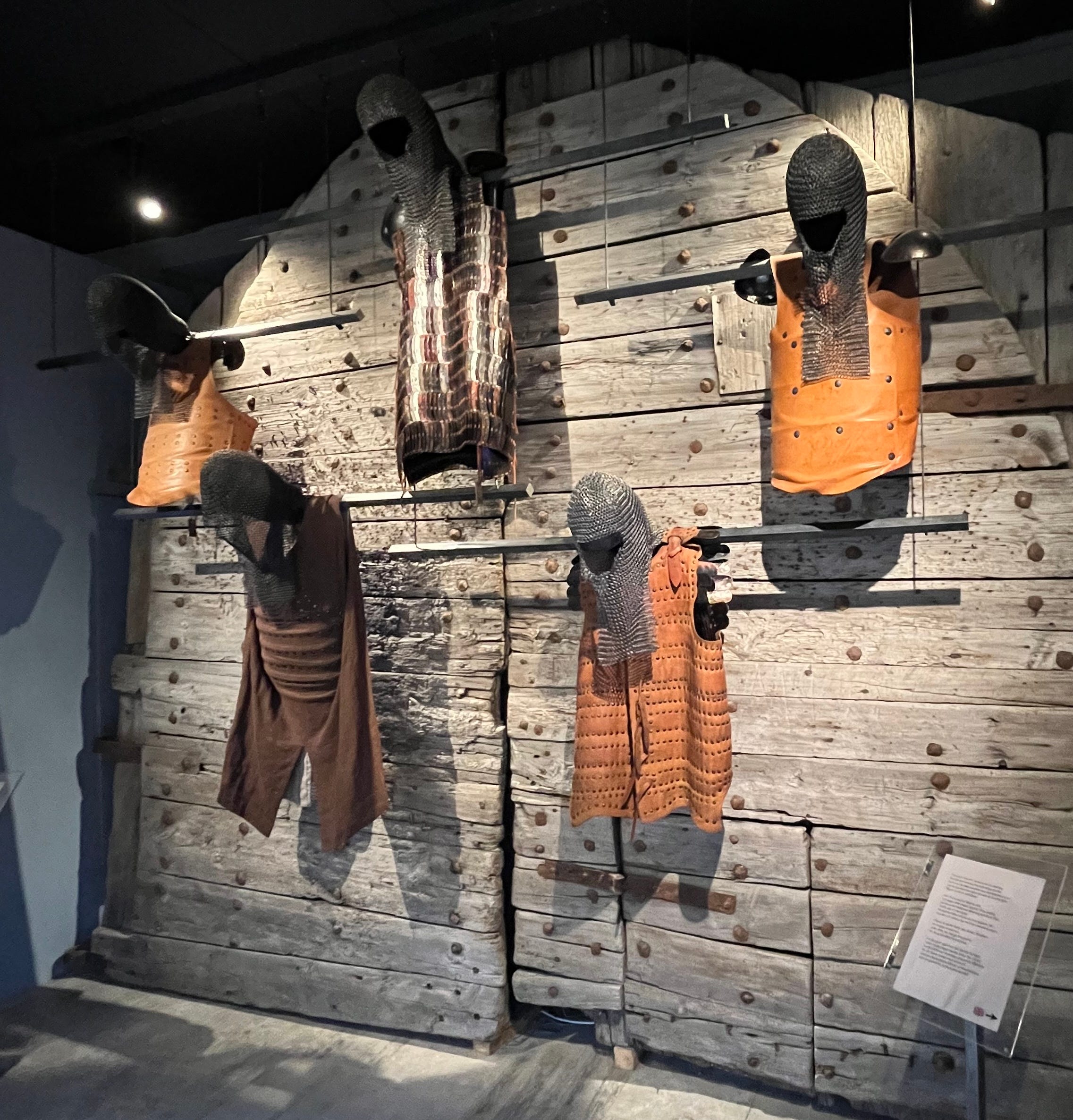
The Gotlanders retreated north, joining up with an army that now had 2,000 men – more than the invasion force. The Danes then headed for Visby, the militia following, and early in the morning of Tuesday the 27th, Valdemar’s men fired a devastating volley of crossbow arrows. The Danes were better trained, better commanded, and had better armour: it was another slaughter, with perhaps 1,500 Gotlanders killed, against 300 attackers. It was steaming hot, which must be why so many buried with their armour on – and why there is now an impressive collection of ancient armour in the Visby museum. The museum reckons at least half the male population of the countryside was killed.
The Visby gates stayed closed during the battle, even to farmers trying to flee. Academics wonder why. Was it because the Visbyites were cowards, or sensible? Anyway two days later the city surrendered. Valdemar demanded money, and according to the legend – still re-enacted – he set up three huge beer barrels and told the city fathers that if the barrels weren’t filled with silver and gold within three days, he would turn his men loose to pillage the town. The people were most obliging, the story, goes, and there is a painting to prove it. Valdemar Attertag holding Visby to ransom, painted in 1881 by Carl Gustaf Hellqvist, hangs in the National Museum of Fine Art in Stockholm. It shows the king sitting on a throne and the locals queuing up with goodies to give him.
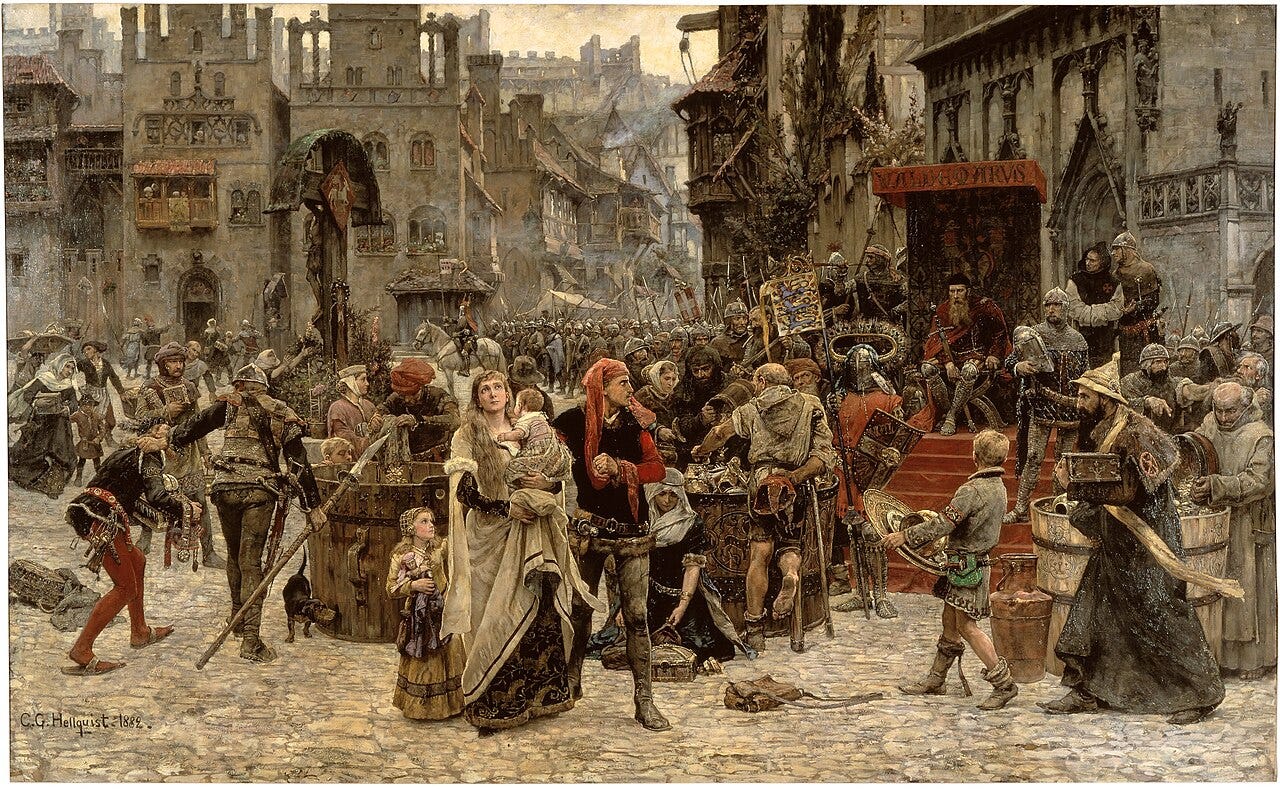
Which may or may not have happened. But it seems that Valdemar did indeed sail away with a lot of treasure, and later started to call himself King of Gotland (the first time there had been one). The other thing we can be sure of is that the Danes showed no restraint in the countryside. In Fide church in southern Gotland there is a mural with an inscription: ‘The field is burnt and the men cry, beaten and in pain under the sword.’
Not that it worked out well for Valdemar. In attacking Visby he was attacking the Hanseatic League, and that was a poor enemy to choose. The Danish-Hanseatic War, from 1361 to 1370, was a war of two halves: the first half was a draw, but the League walked it in the second, sacking Copenhagen and forcing Valdemar into exile. In 1370 the treaty of Stralsund gave the League all the trading rights it demanded. But the Danes were given a consolation prize: Gotland. It remained theoretically Danish for another 300 years.
But only theoretically: the next 50 years were barmy. If you like pirates and mediaeval knights, your time has come. I shall return to them.
A sports metaphor (“war of two halves”) ! That took me by surprise 😳…