
Blowing up a metaphor
The island of Heligoland continued its strange existence to the end of the Second World War. Then the British decided to blow it up.

On April 20th 1947, the British blew Heligoland up. It was the biggest ever non-nuclear explosion, and it significantly changed the shape of the German North Sea island. In British cinemas people watched the so-called Big Bang, filmed from the air.
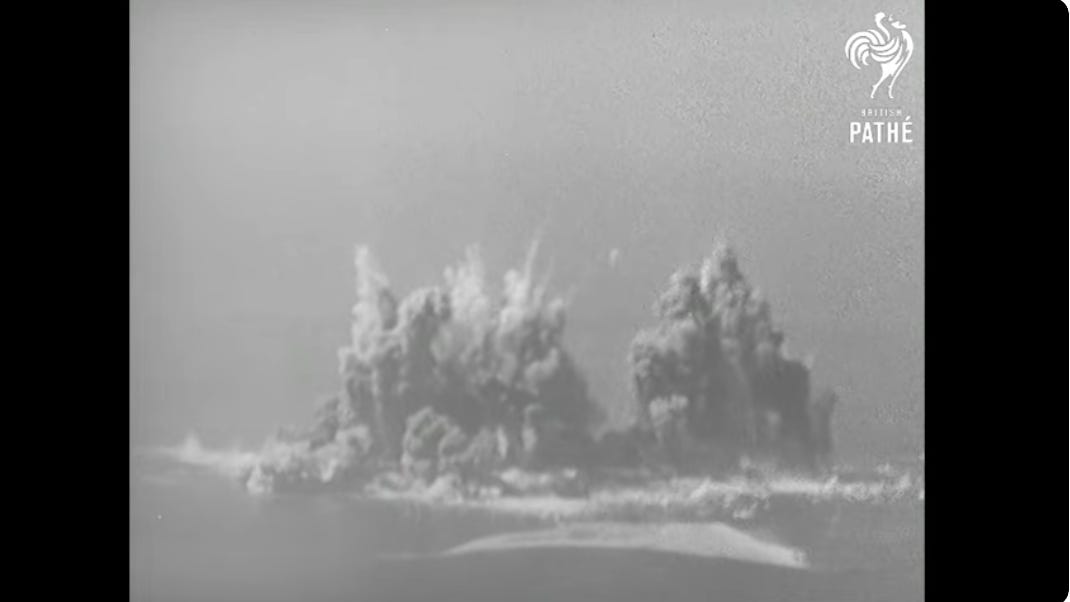
It was the last (I hope) major drama on an island that must have more history per square metre than anywhere else. I’ve already told its story up to 1920s: first how it became British; then how it became German.
No-one was on the island, but before the explosion there had been much horror in Britain: newspapers reported that that Heligoland was a mass assembly point for seabirds. Guillemots and razorbills gathered en masse - and still gather - on cliff edges white-streaked with their doings.
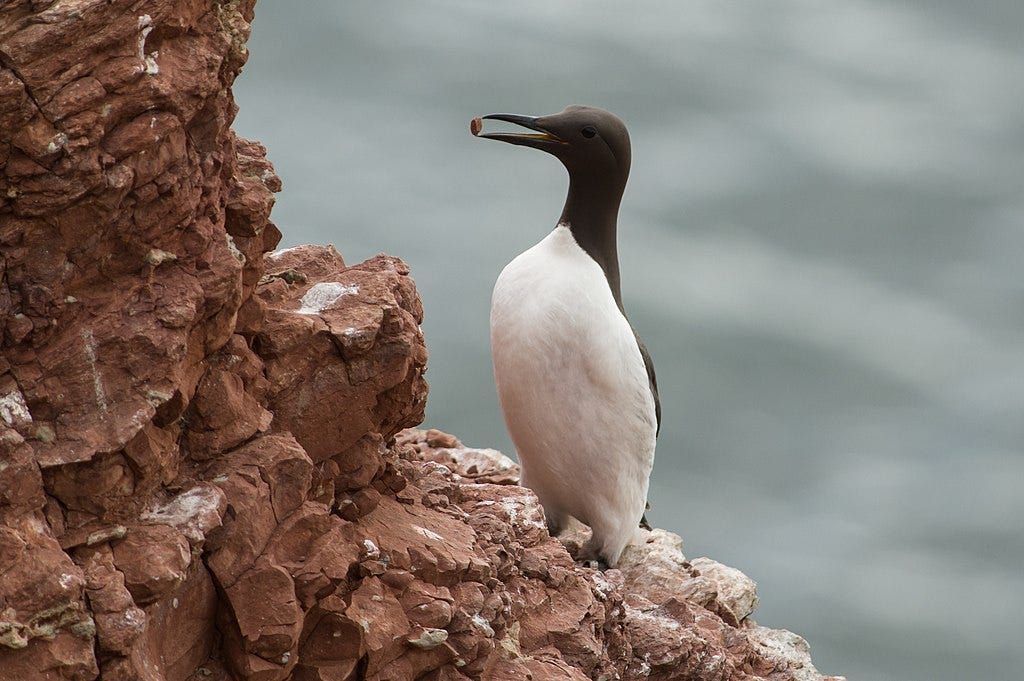
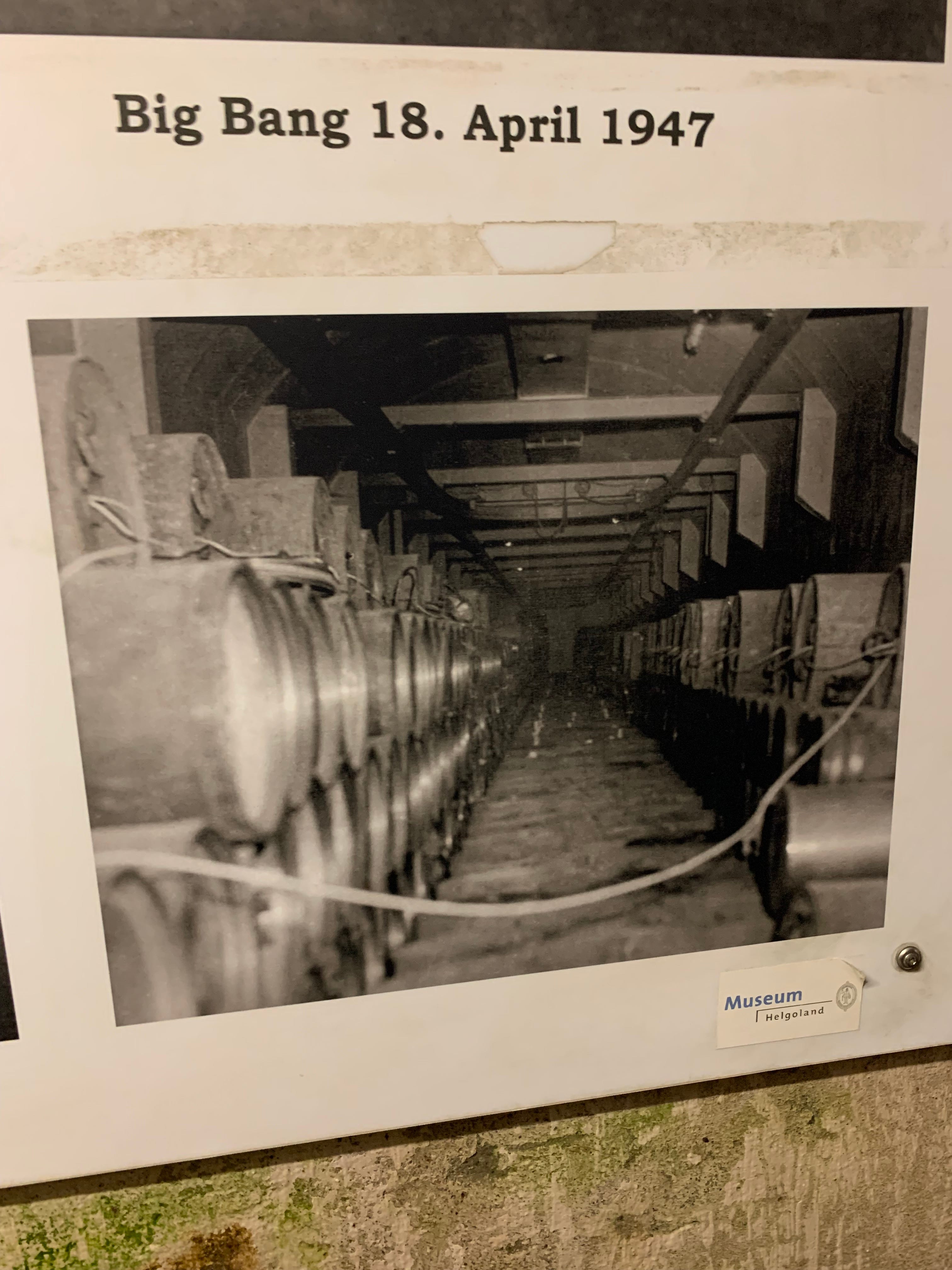
The surest way of losing support in Britain is to hurt animals. So a series of small bangs was set off in advance to frighten the birds away. Then the barrels packed into tunnels were triggered. My friend Gerd and I went on a tour of the few surviving tunnels and saw a photo that reminded me of Guy Fawkes’ barrels under London’s Houses of Parliament. When the the 6,700 tons of explosives went off, they sent a shockwave that was picked up by seismographs in London.
Heligoland was no threat to anyone. So why blow it up? To answer that, we need to pick up the story from the 1920s.
The island is a geological phenomenon: a red rock rising out of the North Sea in an area where islands nearby – the Frisian Islands – were lucky to get 20 feet above sea level. No wonder artists liked to paint it, and Germans called it ‘their Gibraltar’. It became a metaphor as much as a place.
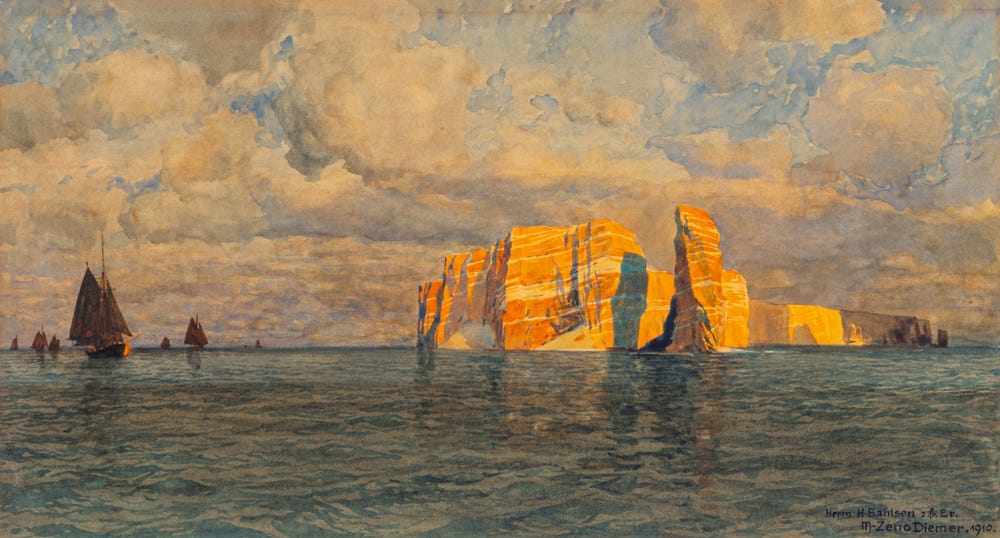
The British held it for most of the nineteenth century, then swapped it for Zanzibar in 1890. The Kaiser, obsessed, fortified it heavily. But it played little part in the First World War and after diplomatic juggling the 1920s, was allowed to stay – defanged militarily – in German hands.
Then in April 1928 Adolf Hitler visited, and immediately saw its potential. The Nazis promoted its shattered gun emplacements as a symbol of Germany’s unjust humiliation. After taking power they ramped up Germanification efforts, not least by cracking down on anyone who appeared to have links to the British (some still did). The state-controlled radio station Reichs-Rundfunk-Gesellschaft declared that ‘Heligoland was a “piece of holy soil” for every German.
The island did well under the Nazis, at least until the War started. It became a Kraft durch Freude (Strength through Joy) destination – a place where loyal party members could have a good time. It was an attractive little place, as this photo we saw on the tunnel wall shows.
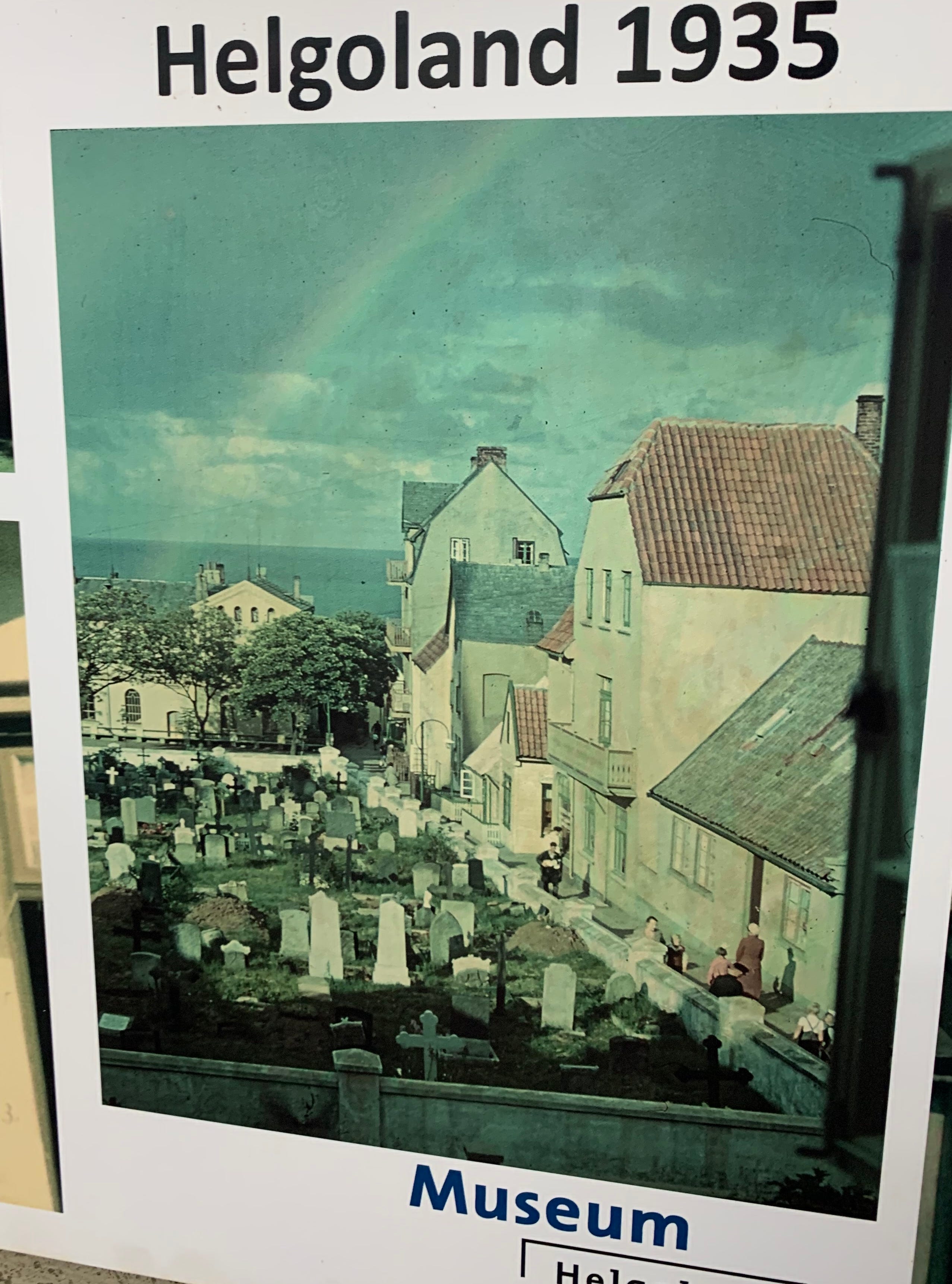
Berlin allowed the island to charge its own taxes on alcohol and tobacco, and to tax companies involved in extensive building works – works that, for the most part, were designed to restore Heligoland as a fortress. The plans were even more grandiose than the Kaiser’s. Work started on Projekt Hummeerschere (‘lobster’s claw’). The idea was to reunite Heligoland and its little neighbour Düne with sea walls 10km long; it would provide a home for the entire German fleet.
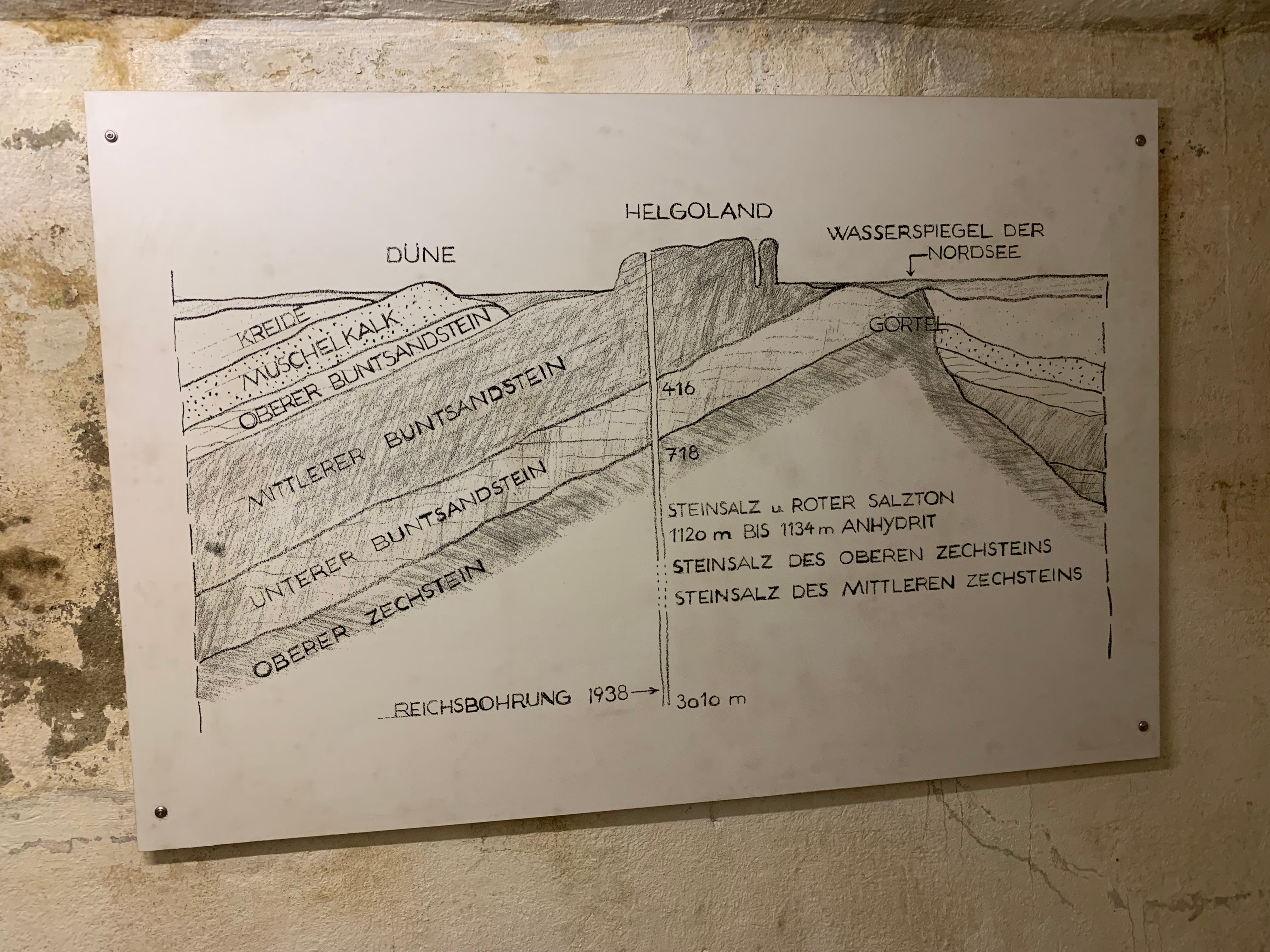
But the Nazis were at least as interested in Heligoland the emblem. ‘For Goebbels, the outpost remained a symbol of Germany’s humiliation,’ says the historian Jan Rüger. It also benefited from the Nazi belief that it was somehow uniquely German, perhaps the birthplace of the German race. Possibly even Atlantis where, obviously, Aryans originated. Heinrich Himmler was obsessed with this idea, and sponsored an organisation that looked for evidence all round the world. Heligoland was one of his targets – he sent divers down to look around its coasts. In one of the rooms off a tunnel, we saw a sketch of a bore hole 3,100m deep drilled down through the middle of the island in 1938. Our guide said this was part of the search for Atlantis. Maybe it was.
When the war came, Heligoland took up much the same role in the German imagination as it had in the First World War – as a super-fortified metaphor. ‘Heligoland, newspapers wrote, embodied a free and powerful Germany that could stand up to the “most vengeful and envious opponents, the English.”’ A painting called Die Wacht (The Watch) repeated the favourite symbolism of Heligoland’s red cliffs with giant eagles circling it. The British meanwhile produced their fair share of stories (and even a board game) featuring Heligoland prominently.
As in the first war, there was a massive gap between this and reality. Work on the lobster’s claw stopped in 1941; U-boats operated instead from French harbours. The island’s principal role was as a radar station.
Until 1943, the Allies bombed Heligoland only sporadically. Its main role for them was as a navigational beacon that allowed planes to stay out at sea until the last minute. There were some big raids later on, but nothing huge until April 1945. We wandered along the green-moulded tunnels. There were constant air raid warnings, our guide explained, which meant civilians could be down here for 36 hours. Despite that it was reasonably civilised, with space for 3,000 people, even if fish occasionally appeared in toilet bowls as they were flushed.
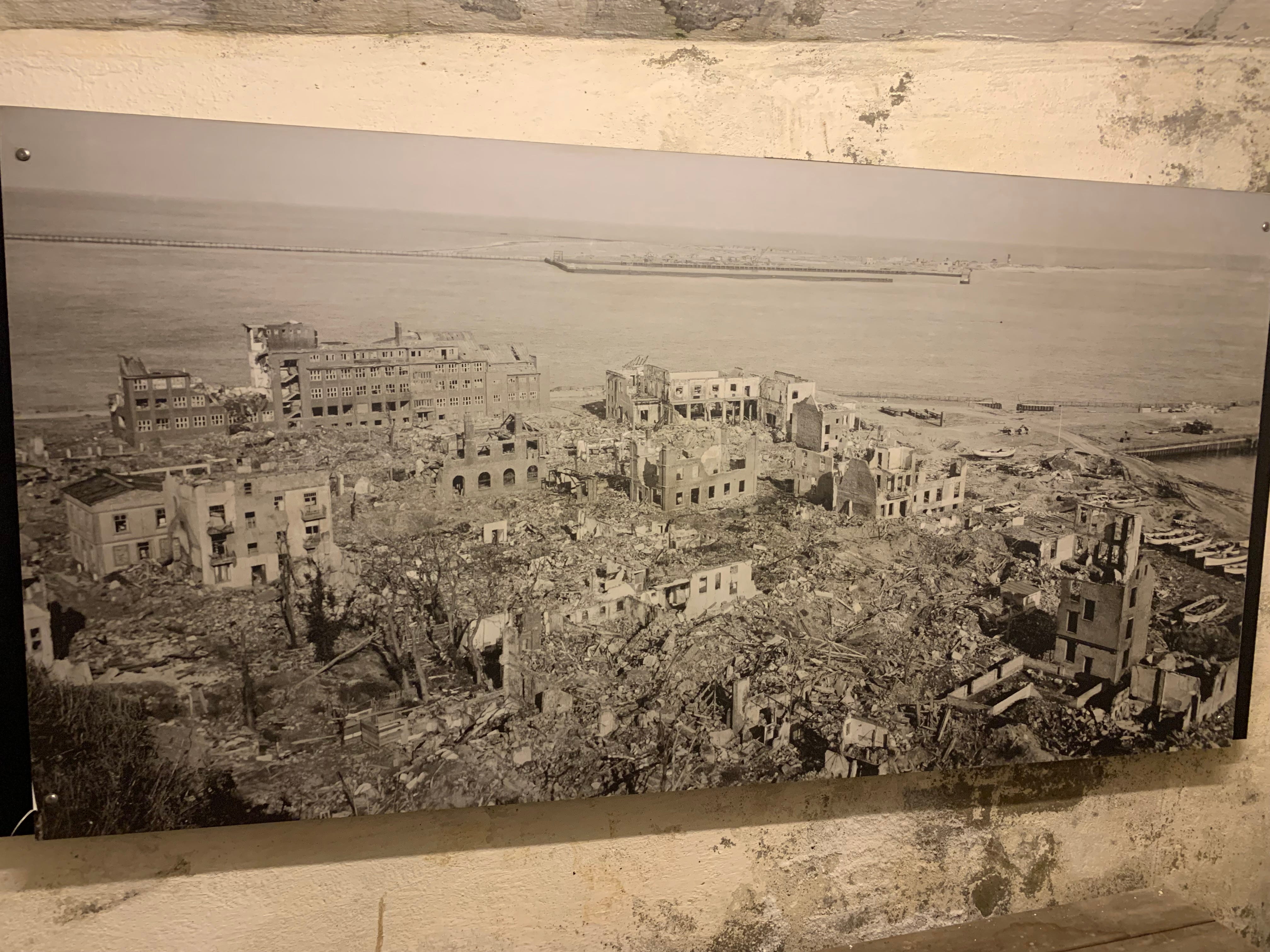
The 6,000 soldiers who shared the island were not so lucky, at least when the British finally decided to launch a gigantic attack a few days before the end of the war. A 1000-aircraft bombing raid destroyed 95 per cent of the buildings. Many soldiers died, but the civilians were safe in the tunnels; after the raid they were evacuated to the mainland.
On May 3rd northern Germany, including Heligoland, surrendered, and the British arrived on the May 11th. German soldiers were shipped out as prisoners of war, followed by the British to their next posting. By May 17th, Heligoland had no human occupants, and the birds had it to themselves.
Why then blow it up? British reasoning was a mix of practical and symbolic. The rationale was that it was the only way of disposing of the vast amount of ammunition stored in the tunnels. The symbolism was obvious, and ‘Big Bang’ was heavily publicised. There was criticism in Britain, but focused only on the birds.
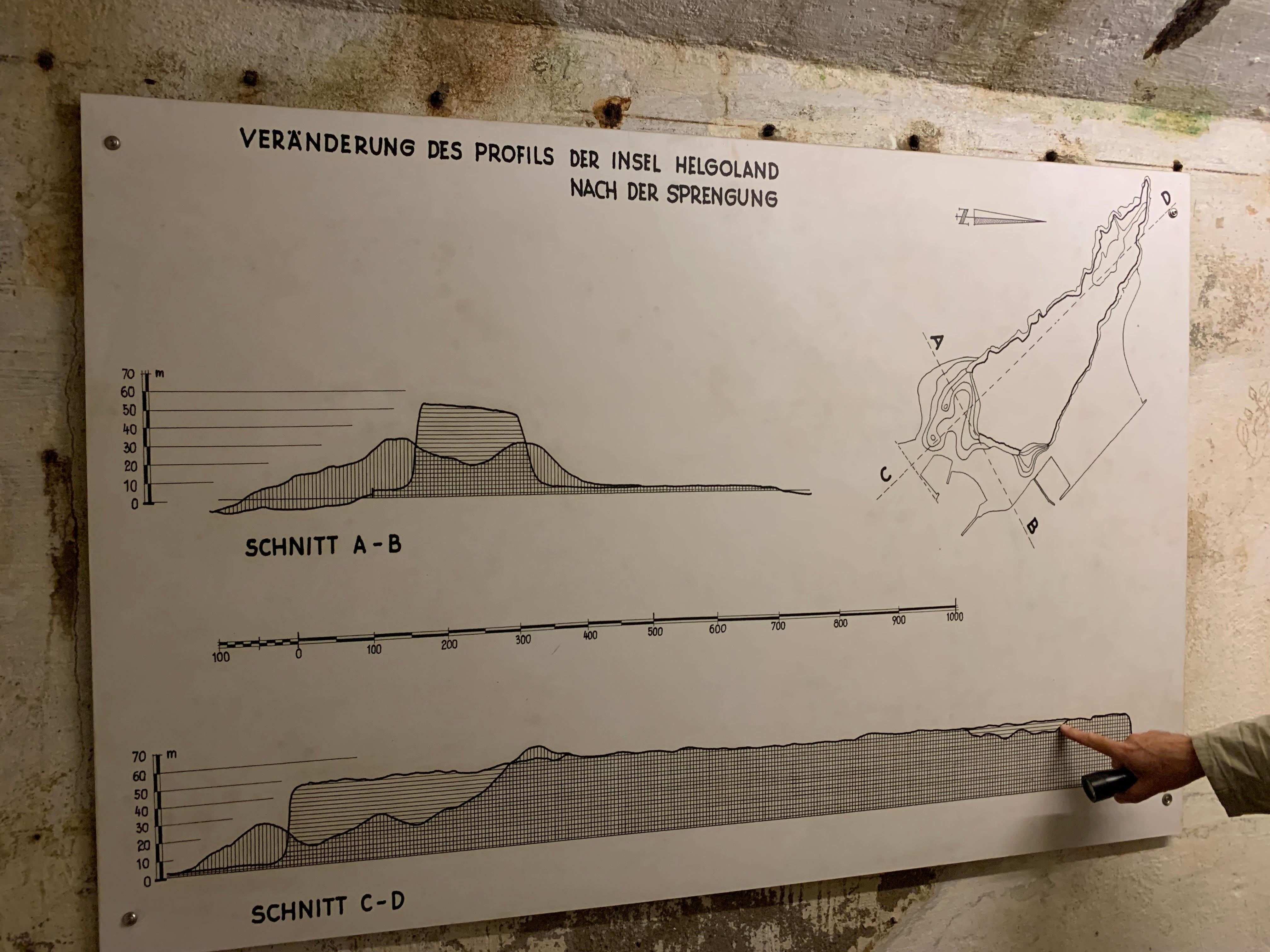
The island was still there after Big Bang – a point the German press was keen to stress. But it was a different shape. One corner of the Oberland plateau had collapsed, creating a new a Mittelland. Diagrams in the tunnels show how the profile of the island had changed – significant if not dramatic.
That was not however the end of the island’s punishment. The Allies could not reach a comprehensive peace agreement – the outbreak of the Cold War saw to that. So in the interim, the Royal Air Force decided to use Heligoland as a bombing range. There is still much evidence of bomb blasts on the pockmarked plateau.
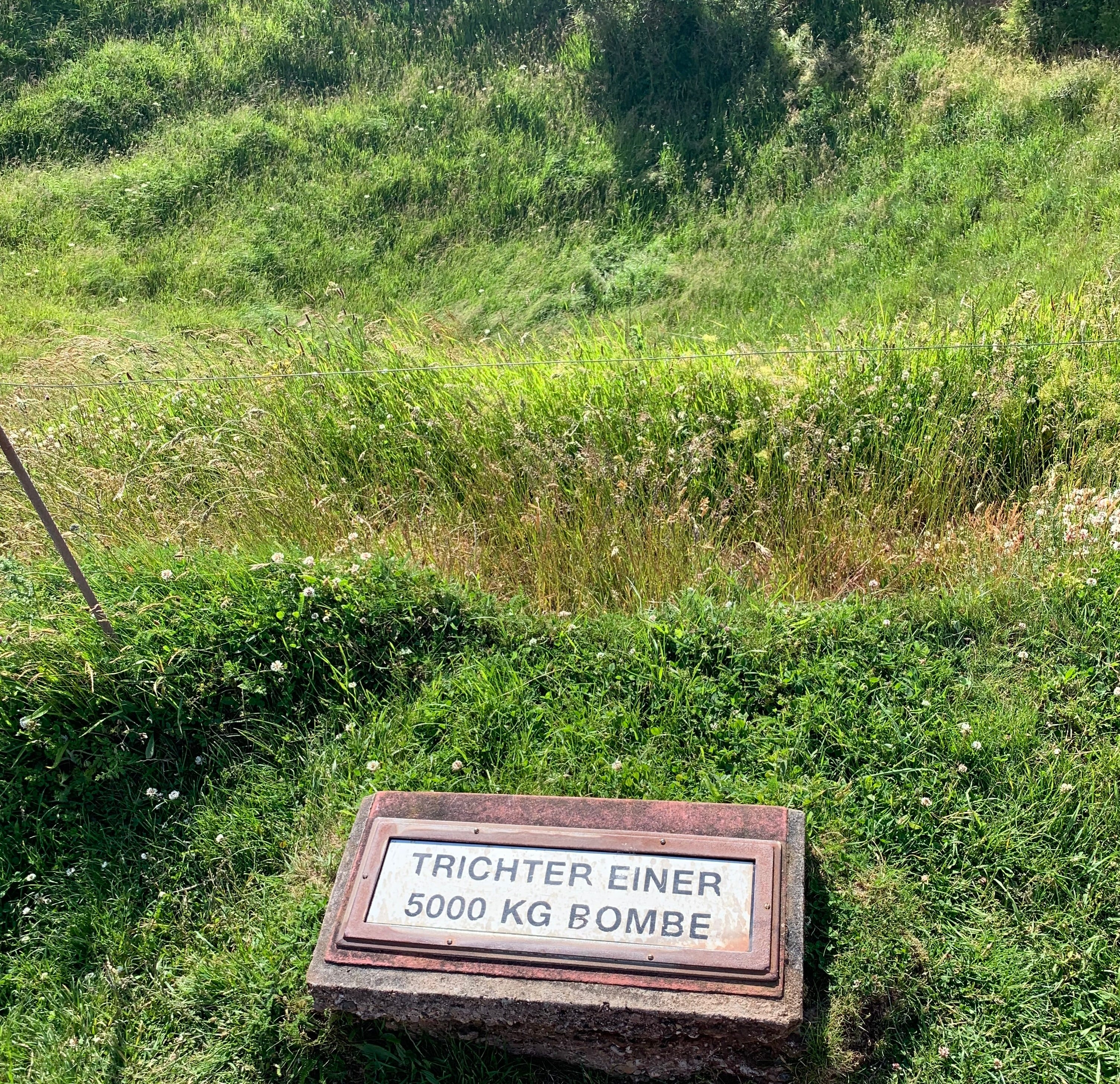
The Germans were outraged, and the exiled Heligolanders joined in. ‘The implication was that the Heligolanders were not to be blamed for the Nazis and should not be made to pay for Hitler’s war,’ Rüger says. They ‘were actively involved in cultivating this narrative of victimhood’.
They made much use of the one very obvious difference between Heligoland after the first and second World Wars. There was relatively little physical damage in 1918 – the defences were dismantled, but the quaint little town remained. After the Second War, it was in ruins. Before and after photos were widely published, with much anger that the British continued to bomb the island after the war was over. The old narrative of Heligoland at the heart of every German was revived, and demands grew for it to be handed back.
The British were at first unimpressed. Rüger summarises the broad sentiment: ‘The North Sea island represented everything that had gone wrong with Germany since the nineteenth century. Giving Heligoland back would amount to repeating mistakes of the past.’
But they did give it back. It started when two students landed on the island at the end of 1951, and raised a German as well as a European Movement flag. They were quickly followed by others, including the extravagantly named Prinz zu Löwenstein-Wertheim-Freudenberg, who declared that he had ‘taken possession of the island for the German empire.’ The East Germans were happy to stir things up, declaring that Heligoland was the site of an anti-imperialist movement – at which point it also became a battleground between capitalism and communism, between victims and occupiers. The British, embarrassed, decided it was time to hand the island back, and on March 1st 1952 they did – with a small ceremony among the rubble.
A competition was held to find a new design for the town. Many people wanted a return to the pre-War look. But the architects who won were modernists, who proposed a bright palette of pastel colours. ‘The new Heligoland was meant to look like the Denmark or Sweden of the present rather than the Germany of the past,’ Rüger says. It was also used to disguise the past – the attractive small houses that line the harbour stand in front of a massive wall that stops the shattered remains of the Mittelland slipping into the sea.
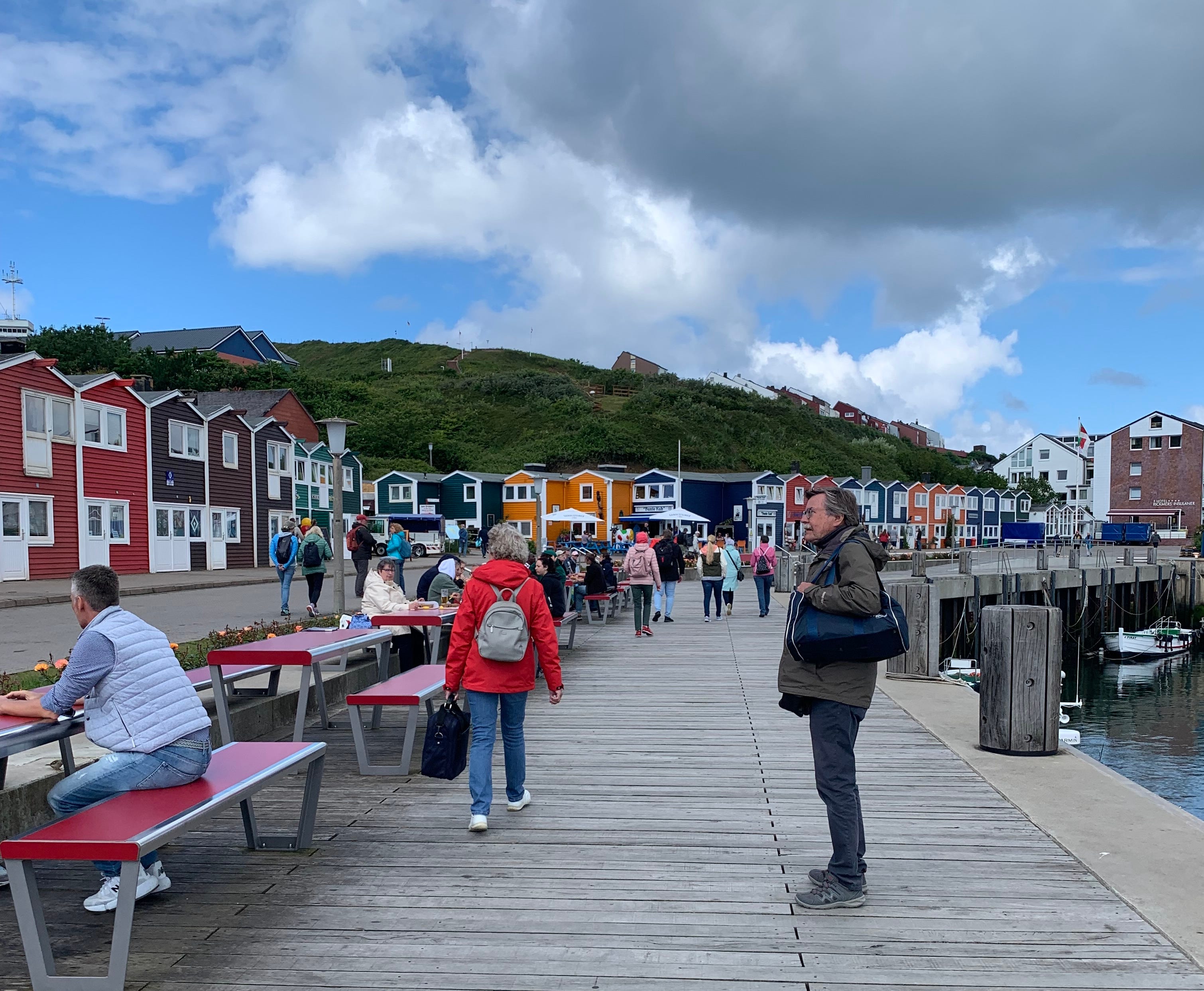
The Heligolanders started to arrive back on their island in 1954; few of them liked the new town that had been built for them. But they got used to it, and started selling duty free cigarettes to tourists again. That was after all how it had flourished in the nineteenth and early twentieth century. Heligoland was back doing what it was good at.
If you are reading this on email and would like to see my extra ramblings, why not try the Substack app? You can find it here if you want it. Then search within it for ‘davidbowenwriter’. Thank you!
Fascinating, Dai. And we think the world is a mad place now!
Not sure if fish occasionally appearing in my loo would be my idea of 'reasonably civilised'.
Each to their own, I suppose.